
A CMO perspective on moving from AI experimentation to marketing advantage
AI has moved quickly through marketing. Luckily for us, we have had firsthand access to cutting-edge tools and support internally. But the way we are now framing the conversation has fundamentally changed. It is no longer about working faster; it is about working better.
Marketing does not happen in isolated tasks, and campaigns don’t fail because a person can’t write a blog more quickly. Better happens across a connected operating model: briefs, budgets, agencies, approvals, brand rules, compliance requirements, reporting, resourcing, and delivery.
So, for CMOs, the AI conversation cannot just be about tools. It has to be about leadership.
A recent McKinsey article, Rewiring for AI: From Ambition to Advantage, argues that companies need to move beyond AI ambition and build the organisational capabilities to scale AI into real business value. One point especially stood out to me: AI advantage comes less from chasing every possible use case and more from focusing on the workflows, adoption, operating model, and business problems that really move the needle.
Here are five questions I believe marketing leadership should be asking now to make the strategic difference their organizations need.
1. Are we using AI to create more work, or to improve how work happens?
This is the first question because it is also the easiest trap.
AI can help teams create more content, faster. But more output is not always the same as more impact.
Marketing teams are already under pressure. More channels. More stakeholders. More personalization. More campaigns. More reporting. If AI simply adds more volume to an already stretched system, it may create as many problems as it solves or just push the bottleneck or breaking point in the system somewhere else.
When it comes to AI’s impact on productivity, I consistently hear the same questions:
- Can AI help create clearer briefs from the start?
- Can it flag missing information before work moves downstream?
- Can it check assets against brand, legal, or channel requirements earlier?
- Can it help route work to the right people?
- Can it give leaders better visibility without another status meeting?
When the answer is yes, AI starts to matter strategically.
The goal should not be more activity. It should be better flow.
2. Where does AI create the greatest value in our marketing operating model?
Not every AI use case is equal.
Some will save minutes. Others will remove recurring bottlenecks. Some will improve quality. Others will reduce risk. Some will help the team move faster, while others will help leaders make better decisions.
The job is to help the organization focus. That means asking where AI can create the greatest operational and commercial value (no new news there, but just a reminder that the context may be different, but the job is the same).
In an agency, that might mean reducing overservicing, improving scoping, or making resourcing decisions more visible. In an enterprise marketing team, it might mean improving campaign intake, standardizing approvals, managing compliance, or increasing visibility across regions and brands.
Avoid chasing the provider that produces the most impressive demo.
The point is to identify the moments where AI can help marketing work better at scale.
3. Do our teams have the confidence and guardrails to use AI well?
AI, like any other technological transformation, quickly becomes not a technology transformation but a people one.
Teams need permission to experiment, but they also need clarity. These questions will need answering:
- What tools are approved?
- What data can be used?
- What needs human review?
- What should never be automated?
- What does good AI-supported work look like?
Without clear guardrails, two things happen.
Some people move too fast and create risk. Others hold back because they are unsure what is allowed.
Marketing leadership has a key role to play here: setting the tone. AI should feel like something that helps your team do better work.
That requires communication, training, governance, and trust.
It also requires honesty. AI will not replace the judgment, creativity, empathy, and commercial understanding that great marketing depends on. But it can remove a lot of the manual effort and operational drag that gets in the way.
4. Is AI embedded in our workflows, or sitting outside them?
This may be the most important operational question.
A lot of AI activity still happens outside the workflow. Someone opens a separate tool, generates an output, copies it into a document, sends it to another person, and then the usual process continues.
That can be useful for individual productivity. But it does not necessarily improve the way the organization works.
When AI sits outside the workflow, it can create new fragmentation. Outputs vary by person. Governance becomes manual. Approvals are unclear. Knowledge sits in different places.
When AI sits inside the workflow, it can follow the same rules, roles, permissions, approvals, and audit trails as the rest of the business.
That is where the real shift happens.
A briefing agent can support better inputs using approved templates and brand knowledge. A proofing agent can flag inconsistencies before work moves forward. A compliance agent can check requirements earlier. A resourcing agent can recommend assignments based on skills, workload, and availability.
Embedding AI where people work, it improves the flow of work and becomes a system that gathers information and context and gets smarter. Built in the right environment, with the right components, agents drive performance for everyone.
5. How will we move from AI ambition to measurable advantage?
Discipline here is the key. AI ambition is easy to create. Advantage is harder.
Advantage requires prioritization. It requires the right use cases. It requires adoption. It requires governance. It requires measurement. It requires a way to improve over time.
For marketing leaders, the measures should connect to business outcomes and operating performance.
The real promise of AI in marketing goes beyond helping one person complete one task faster. It’s that AI helps the whole marketing organization operate with more clarity, control, and confidence.
The CMO’s role is to lead the shift
You do not need to become an AI engineer. But you do need to lead the conversation about where AI belongs in marketing.
That means setting the vision, choosing the right priorities, creating the right guardrails, and giving teams the tools and confidence to adopt AI in a way that supports the business.
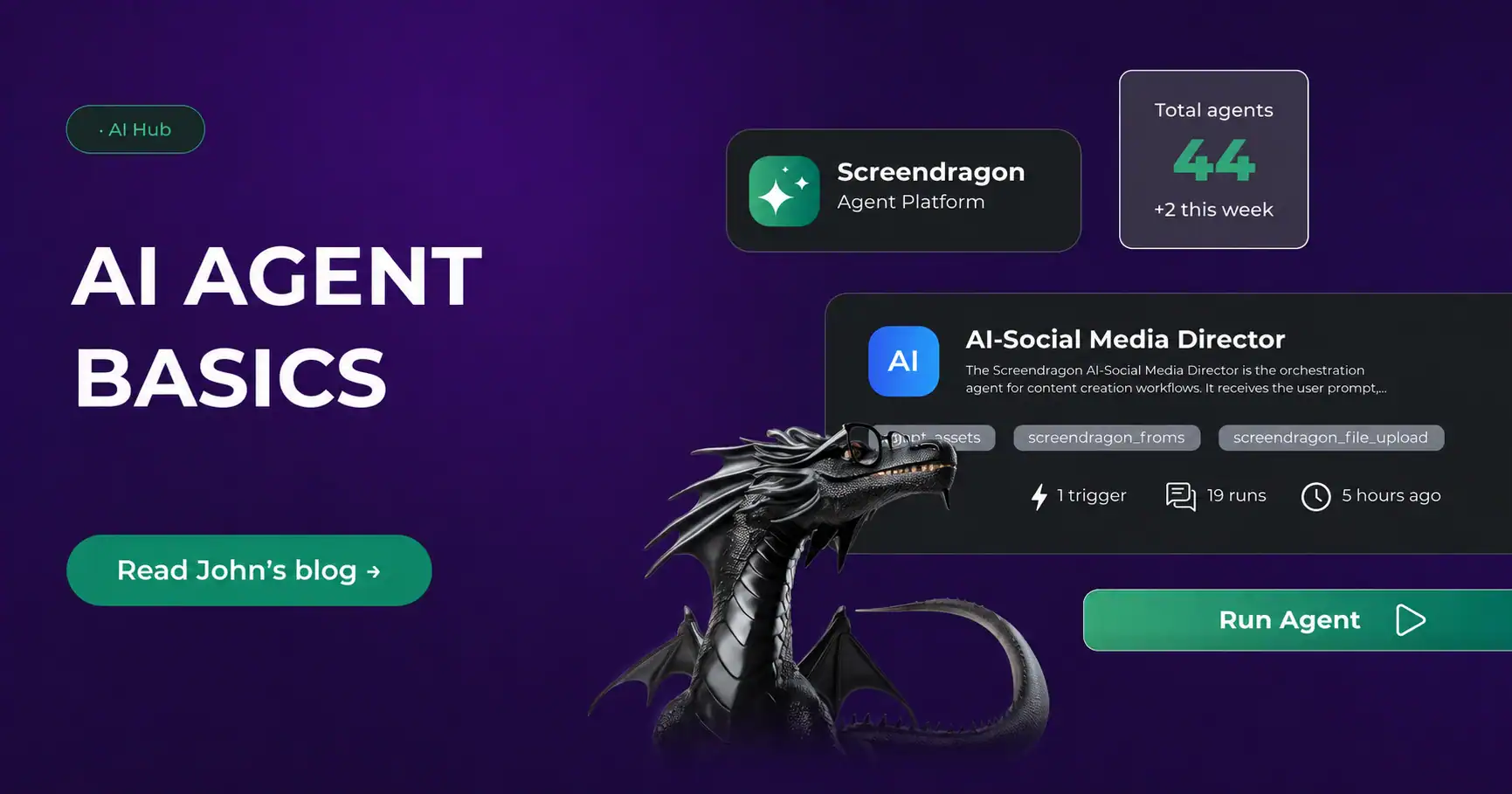
This is exactly why we launched Screendragon’s AI Hub.
AI Hub gives enterprise marketing teams and agencies a controlled environment to build, deploy, and govern AI agents directly inside their workflows.
AI is no longer just a question of innovation. It is a question of operational leadership.