


Agencies don’t just balance budgets and deadlines to survive; they’re balancing people, skills, time, and energy. Successful project management depends on getting the right resources in the right place at the right time…without overwhelming your team or missing deadlines.
That’s where resource allocation comes in. But what exactly is resource allocation, and why is it so critical for agency leaders to master?
In this guide, we’ll unpack the fundamentals of resource allocation in project management, explain why it matters so much for agencies, and show you how to create a smarter, more flexible resource allocation plan.
Resource Allocation Definition
Resource allocation is the strategic process of assigning and managing assets — whether that’s people, budgets, tools, or time — to meet project goals effectively. In agencies, smart resource allocation ensures that the right expertise is deployed where and when it’s needed, reducing bottlenecks and maximising project outcomes without overloading teams.
Resource Allocation vs. Resource Planning
While resource planning involves identifying the resources you’ll need before a project begins, resource allocation is about the deciding, adjusting, and reallocating as the project moves forward. Both are essential, but allocation is where real flexibility and responsiveness live.
Resource planning also refers to the broader strategy that predicts what resources will be needed, how and when they’ll be used, and what the potential constraints may be. While resource allocation focuses on the actual assignment of resources, resource planning makes it easier for the right resources to be available at the right time.
How Are Resources Allocated in Agencies?
In agency settings, resources are typically allocated based on project requirements, staff availability, client priorities, and timelines. Managers assess workload forecasts, evaluate resource skillsets, and balance capacity with project urgency, often adjusting allocations dynamically as projects evolve. The goal is to maintain both efficiency and flexibility while safeguarding team well-being.
What is a Resource in Project Management?
In project management, a “resource” can be anything you need to complete a project: people, tools, technology, time, skills, or budget. Resources aren’t just about headcount; they’re about matching capabilities to project needs.
Examples of Resources in Business:
- Human resources (designers, developers, writers)
- Financial resources (budgets, funding)
- Physical resources (equipment, office space)
- Technological resources (software, digital tools)
- Time (availability, deadlines)
Why is Resource Management Important in Agencies?
Creative agencies no longer have the luxury of linear timelines or predictable scopes. Today’s team, rahter, is asked to spin up campaigns, revise concepts, and deliver across platforms — all while working within the same headcount and hours.
What this means is that resource management has become less about staffing and more about strategy.
As Fergus Ashe, Chief Commercial Officer at Screendragon, puts bluntly in the Creative Operations Trends 2025 report:
“The challenge isn’t just to move quickly — it’s to move strategically.”
Agencies that understand where their talent is being used, where it’s stretched, and where it’s underleveraged are the ones who can scale without sacrificing creativity. They’re also the ones who can forecast bottlenecks before they happen—turning resourcing into a performance lever, not a problem to react to.
How to Allocate Resources
Resource allocation isn’t a one-off decision where managers simply match people to projects and walk away. Rather, the strongest agencies treat resource allocation as a living system. Effective allocation creates a continuous process that adapts to project dynamics, requiring visibility, flexibility, and proactive management to ensure resources align with evolving project demands.
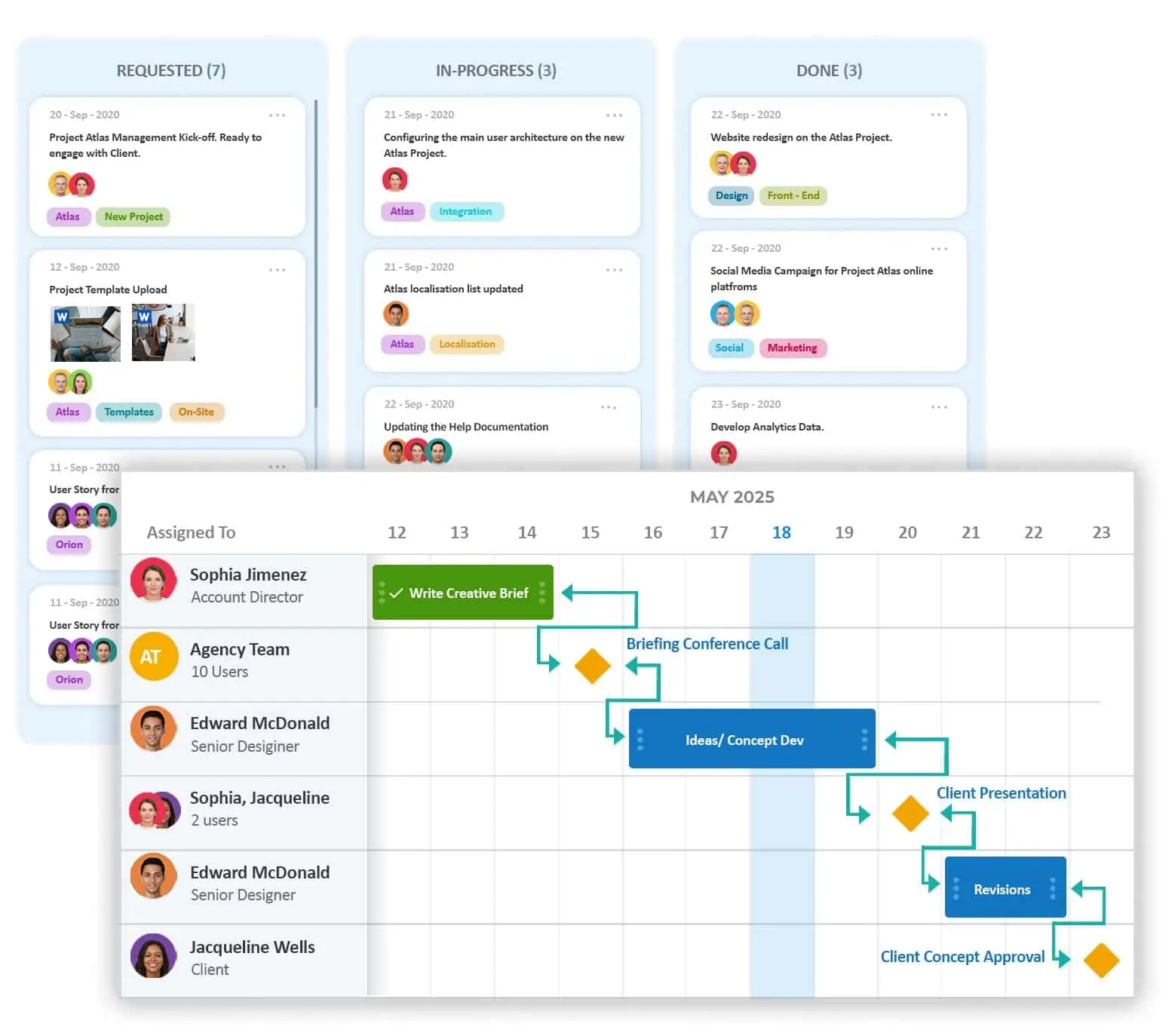
Screendragon Resource Allocation Example: Assigning project tasks to team members with timelines and capacity in view
The Resource Allocation Process, Step-by-Step:
1. Define project requirements
Every resourcing decision begins with clarity. Establish the scope, deadlines, deliverables, and core skills required so that allocation supports execution from day one.
2. Map available resources
Assess availability across teams with an eye on both current commitments and upcoming capacity. Visibility into real-time workload is essential for making informed assignments.
3. Match resources to tasks
Align people to work where their skills have the greatest impact. The goal is fit, not just filling roles, so each team member contributes where they’re most effective.
4. Monitor Progress
Track resourcing in motion. Surface conflicts early, watch for overutilization, and stay responsive to shifting demands throughout the project lifecycle.
Read how to use workflow management software for agency task management to master this step.
5. Optimise
Adapt allocation as projects move. Revisit the plan regularly to reassign talent, close gaps, and ensure that resourcing stays aligned with changing priorities and timelines.
Managing this process well ensures projects stay on track without causing team fatigue or misalignment.
Key Elements to a Resource Allocation Plan
Acting as the central nervous system for projects, good resource allocation plans require more than a spreadsheet. To build an effective resource allocation plan, agency leaders require:
- Full visibility: Understanding who is working on what and when to avoid clashes and bottlenecks.
- Capacity assessments: Evaluating your team’s current and future workload to prevent overload.
- Flexibility mechanisms: Creating contingency plans to adapt quickly when projects shift.
- Tools and tracking systems: Leveraging real-time dashboards and updates to monitor allocation efficiency.
Tips for Resource Optimisation
Forget about “set it and forget it.” Effective resource optimisation and allocation is like managing a living, breathing ecosystem.
Here’s how agencies stay sharp:
- Bake in Buffer Time: Assume projects will shift — because they always do.
- Prioritise Impact Over Availability: Don’t just fill gaps; match talent to mission-critical deliverables.
- Forecast Like a Futurist: Use data trends to predict capacity bottlenecks before they happen.
- Check Your Gut: Combine data with manager intuition — numbers alone can’t read burnout signals.
Agencies that treat resource allocation as a proactive craft (not a reactive chore) build stronger, more resilient teams.
Common Resource Allocation Strategies
Resource allocation strategies provide frameworks for distributing resources efficiently across projects. Common agency resource strategies include:
- Allocation by need: Prioritising projects with the highest strategic importance or most urgent deadlines.
- First-come, first-served: Assigning resources based on the order of project initiation, often used when demand is high and predictable.
- Optimisation models: Using data-driven approaches to balance workloads, reduce bottlenecks, and maximise overall team productivity.
- Allocation by availability: Assigning tasks based on who is immediately free, although this can risk mismatching skills to project needs.
Understanding and applying the right allocation strategy is key to maintaining both project momentum and employee satisfaction.
Resource Allocation Example: Customer Case Study
When Geometry Global — a global brand activation agency — recognized growing inefficiencies in its project workflows, they didn’t just look to cut admin time or track projects better. Their goal was more fundamental: to build a resourcing model that could flex as fast as the client work it supported.
For this Screendragon customer, resource planning was historically done offline, scattered across emails and spreadsheets, with limited visibility across teams. The impact? Bottlenecks, blind spots, and burnout.
The turning point came when Geometry shifted toward a centralised resource allocation approach, using Screendragon’s agency management software:
- Capacity could now be forecasted months ahead, not just week-to-week.
- Resourcing decisions aligned more closely with skillsets and project requirements.
- Project managers gained visibility into costs and workload changes in real-time.
It wasn’t about having more resources—it was about making better use of the people they had. With this visibility, Geometry also achieved smarter staffing, faster onboarding, and stronger delivery outcomes.
Choosing the Right Resource Planning Tools for Agencies
Resource planning tools are critical for executing a strong allocation strategy. Look for features like:
- Real-time capacity tracking
- Skill tagging and role mapping
- Scenario planning (“what-if” models)
- Automated conflict detection
Platforms like Screendragon’s agency project management system unify project, resource, and capacity management in one place—making proactive allocation easier and more accurate.
Leverage Resource Allocation for Agency Growth with Screendragon
When agencies master resource allocation, they build the foundation for sustainable, scalable growth. Teams stay energised, clients get the best results, and operational chaos is replaced by confident, strategic delivery.
But achieving true resource agility requires more than good intentions and best practices, it takes flexible resource management software to give you real-time visibility, flexibility, and control over your team’s workload.
Designed specifically for agencies, Screendragon helps you plan smarter, allocate faster, and adapt with confidence as client demands evolve.
Ready to take control of your agency’s resources and your growth trajectory? Book a demo to see Screendragon’s resource allocation platform in action.