

Introduction
The in-house agency model is clearly working. In the last three years alone, there has been nearly a 20% increase in the number of in-house agencies (Source: IHAF 2020). The pandemic has pushed the in-house agency further into the limelight with creative leaders realising just how important in-housing is for agility and control – something not as easy to achieve with a complete reliance on outside partners.
With new in-house agencies forming every day, the pressure is on creative leaders to adjust to a new way of working fast. As we know, an in-house agency can’t be built in a day; for it to succeed, careful planning and consideration needs to go into many different areas of the business including resourcing, communication, reporting and technology.
In this guidebook, we provide you with expert tips and advice on how to build and grow your in-house agency for success. Whether you’re in the process of moving to an in-house agency model or have a fully established in-house agency, you will be able to gain some valuable insights and knowledge from this guidebook.
We hope you enjoy it!
Getting buy-in for your in-house agency
Transitioning to an agency structure is going to require more money and a change in mindset from your existing, internal clients. That means you’re going to need buy-in from the very top to make this a success. Nobody likes change, particularly if they can’t see the value of doing so, and so you’re going to have to show senior leadership why the current setup is not good for business and how moving to a new way of working is going to be beneficial for all.
MONEY TALKS!
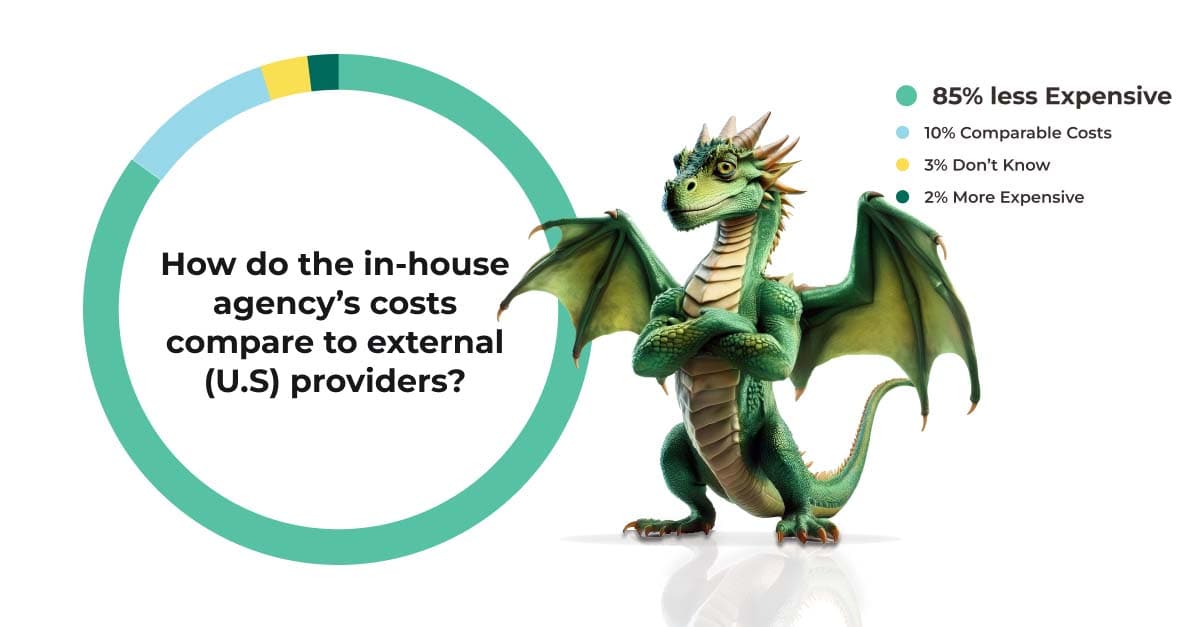
In a recent survey of in-house agencies by IHAF, 85% said that their in-house costs were less expensive when compared to external partners. Make sure you can provide accurate estimates of project costs for your new in-house agency and be able to compare with agency supplier costs.
Build a timeline for success
Making the transition to an in-house agency is not going to be quick and easy. By planning the end-to-end journey, you have a better chance of avoiding any pitfalls along the way.
Some questions you need to ask include;
- Type:
Will you be a full service in-house agency or take a hybrid approach? - Resources:
How many? Can you meet all skill sets in-house? Will you need to hire outside talent? Should this talent come from an agency to help diversify your team? - Functions:
What functions will your in-house agency fulfill? What functions will be outsourced, if any? Do you anticipate this changing down the road? - Costs:
What are the short-term and long-term cost implications of moving to an in-house agency? E.g. you may need to expand or restructure your tech stack to get your in-house agency up and running. - Milestones:
What are your key milestones and how will you measure success? - Roadmap:
What is your 1, 3 and 5 year plan for the in-house agency?
Reorganize your team
Ok. So you’ve got buy-in from the top. You know what you want to offer. You know what you’re still going to outsource for now and you’ve made a plan. Now it’s time to start putting that plan into action and the first thing you’ll need to do is structure yourself like an agency.
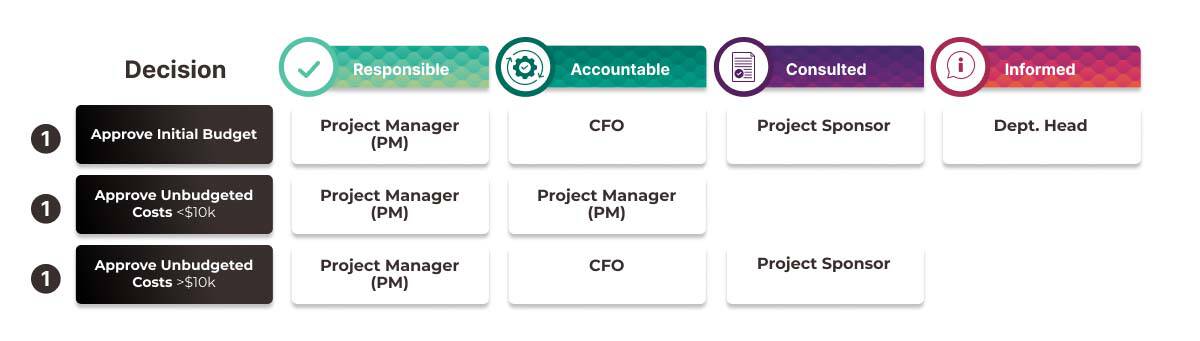
Create a RACI model
A new way of working requires new understanding of accountabilities. Take time to define this with individuals so everyone understands their role and what’s expected of them.
A well implemented agency workflow system can support a well governed RACI model – it will help ensure that the right people are informed and involved in decision-making at the right time.

RACI Model in Action
Standardize your processes
Agencies are particularly good at managing multiple projects from multiple clients because they standardize their processes. From onboarding a new client or project, through to signing off the finished project and reporting on it – there needs to be a standard process for each part of a client or project journey.
Take the example of how an agency manages a creative brief submission below. The right people are involved at the right time, eliminating the need for unnecessary email conversations or excel docs to facilitate record keeping.

Create SLAs
Agencies also rely on SLA’s to ensure a smooth agency-client relationship – clients know what to expect and when to expect it. With an in-house agency, SLA’s can also play an important role in managing the expectations of new internal clients.
Here is an example of how a well-structured agency and production company organizes their service levels.

Communicating the change and branding your in-house agency
According to a recent IHAF report, 44% of business stakeholders do not know their internal agency’s purpose, mission, or objective. It is one thing to develop clear goals, milestones and a roadmap for your internal agency but it is another to be able to effectively communicate its overall purpose in a clear way to the wider organization.
Here are three ways to help communicate the change and promote your in-house agency:
- Develop a clear purpose statement for your in-house agency
A purpose statement is a great way to help engage your wider organization and enable employees to better understand the value or purpose of your internal agency. It’s a single statement which can be used again and again to promote your in-house agency and it will really help to drive home the ‘why’ behind your internal agency. - Build a brand identity for your in-house agency
Create a name, outline your mission and values and designate a physical space for your internal agency within your organization. For example, The Clorox Company’s in-house agency recently rebranded as Electro Creative Workshop and it continually works to promote and raise awareness internally about its activities and achievements. - Launch a brand awareness campaign
Launch a dedicated event and/or regular lunchtime Q & A sessions to help the brands in your organization understand the purpose of your internal agency and how they’ll need to work with you going forward
Tip!
Implement a time-tracking solution to allow for KPI tracking Work with your procurement team to find out what external resource rates you have with vendor partners and then apply these rates to the internal time-tracking hours to calculate the production cost savings.
How to measure in-house
agency success
Earlier on in this guide, we talked about the need to define the objectives of the move to an in-house agency and the value it would bring to the organization. We also spoke about setting milestones and determining KPIs. In the case of the latter, it’s clear that the pandemic has forced us to focus even more on metrics and data, something which was inevitably going to happen but has been pushed to the forefront out of sheer necessity.
In order to make smart business decisions fast, creative and marketing leaders need to have access to certain data about their in-house agency operations. The more knowledge they are armed with, the smarter and quicker those decisions will be. In this case, technology is the best friend of an in-house agency leader who wants to successfully fulfill their role of having complete visibility over all moving parts.
Estimated vs actual costs of projects’ was rated as the No.1 creative operations metric to measure by creative leaders. (The State of Creative Operations in 2020, Screendragon)
Here are some of the metrics that matter when it comes to measuring in-house agency success:
Financial metrics
- Estimated versus actual costs of projects
- In-house production costs vs external partner production costs by project type
Performance metrics
- Rounds of revisions to final approval
- No. of projects completed
- No. of projects requested by person/department
- Total time spent on individual projects
- Average time to complete by project type
- Percent of projects delivered on time
Quality metrics
- On-brand consistency: Is work aligned with brand voice and brand standards
- Legal requirements: Does work comply with legal and trademark regulations
Conclusion
Making a change that will last
Transitioning to an in-house agency requires significant preparation and planning, but it does pay off – both in terms of cost savings and the continued successful growth of your brands. Having the right technology in place to manage your in-house operations, from implementation to formation and thereafter, is what will really secure its success.
A ‘full circle’ creative operations management solution that provides you with easy access to real-time progress updates, gives you a snapshot of resource performance and capacity, and importantly, enables you to keep your budget on track, will not only help to support your case for making the move to an in-house agency in the first place but it will also help you make a case for extra head-count down the road if needed.
Of course, there are many other huge benefits to implementing a fully integrated creative operations solution for your in-house agency – automated approval workflows will help you to speed-up delivery and get more projects out the door faster and on-brand and real-time collaboration and proofing will help connect and inspire your remote team to produce better work together.
Combine good talent with good leadership and a fully consolidated creative operations management solution and you’ve got a stellar in-house agency that can scale for success!
About Screendragon
Screendragon is the leading creative operations management solution for in-house agencies. We have been working in the creative operations space for over 15 years, driving efficiency and cost-saving gains for global brands and agencies like Kellogg’s, Keurig Dr. Pepper, Interbrand and McCann World Group.
Screendragon provides high-performing teams with an end-to-end creative operations management solution – combining project, resource, workflow, and budget management – in one seamlessly integrated platform. Our software is built for creatives and marketers.
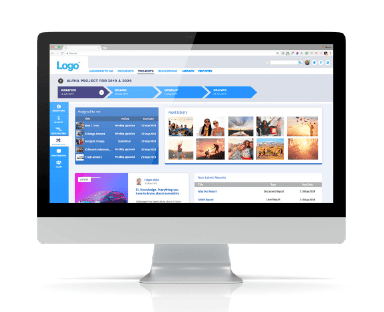
Want to see Screendragon’s in-house agency management software in action?
Request a 30-minute demo with one of our solutions experts.