

Summary
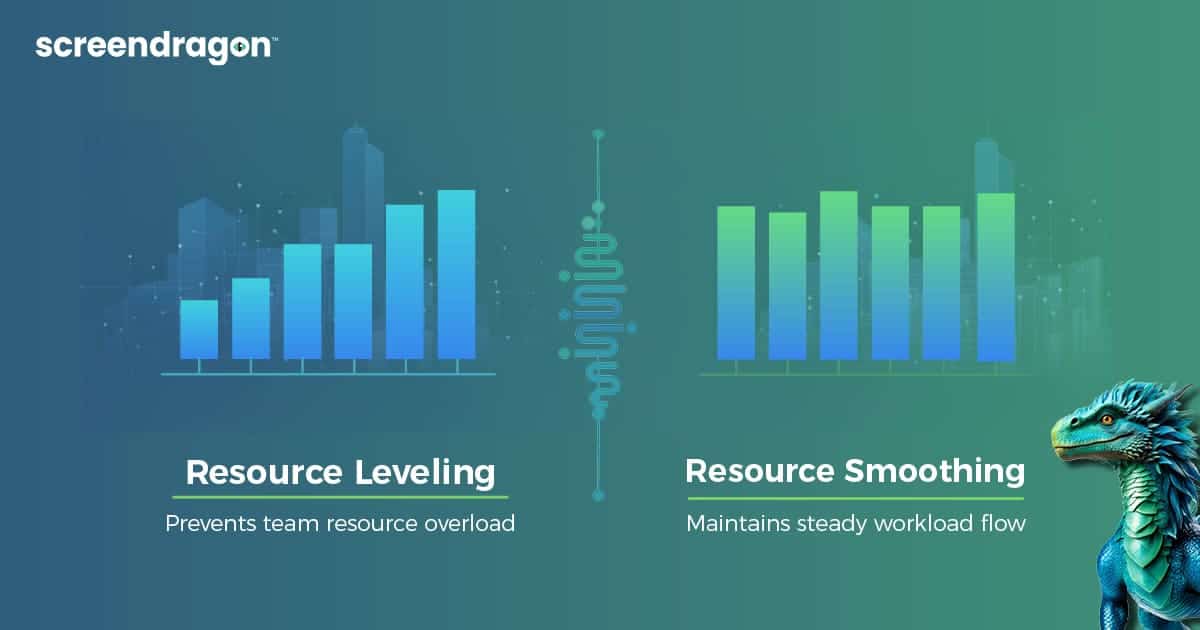
Two of the most widely used approaches in project management are resource leveling and resource smoothing. They sound similar, but they solve different problems and lead to very different outcomes if used incorrectly.
Resource constraints are one of the most common reasons projects fall behind. Teams run out of capacity, specialists are overbooked, and timelines begin to slip. That is where these resource optimisation techniques become critical.
This guide explains resource leveling vs resource smoothing, how each technique works, when to use them, and how to avoid common mistakes that undermine delivery.
What is Resource Leveling in Project Management
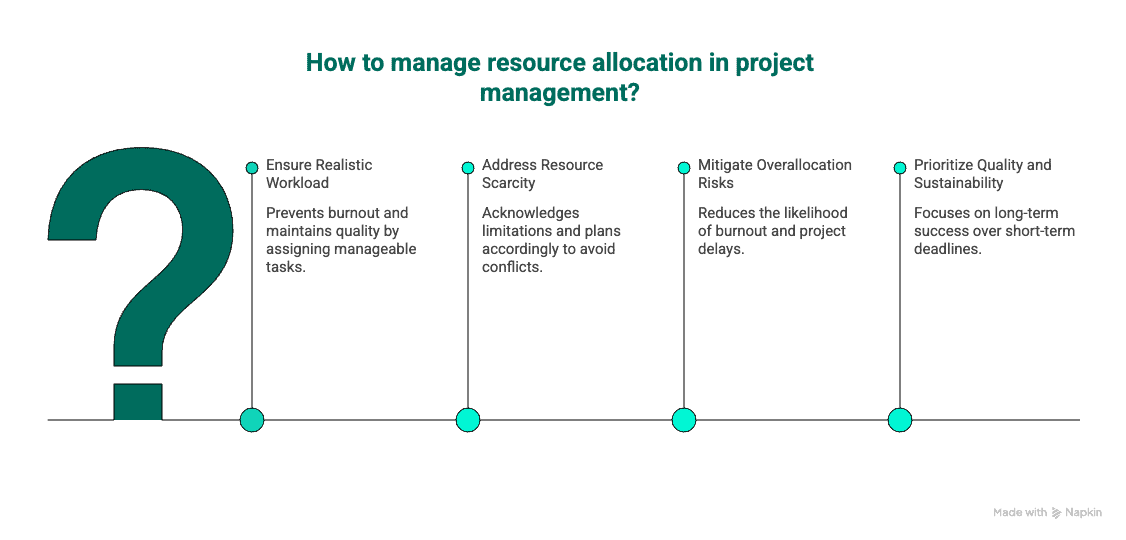
Resource leveling resolves resource overloads by adjusting the project schedule. When demand exceeds capacity, you delay or reschedule tasks so your team can complete the work with the resources you have available.
In resource leveling project management, timelines are flexible but resource limits are not. The primary goal is to ensure that no individual or role is assigned more work than they can realistically handle.
This approach is often used when:
- Resources are fixed or scarce
- Overallocation creates risk or burnout
- Quality and sustainability matter more than deadlines
Resource levelling in project management prioritises feasibility over speed.
What is Resource Smoothing in Project Management?
Resource smoothing aims to reduce fluctuations in resource usage without changing the overall project end date. Instead of delaying tasks, work is rearranged within existing float or slack.
In resource smoothing in project management, deadlines are fixed but flexibility exists in how tasks are sequenced.
This technique is most effective when:
- Projects have built-in buffer time
- Deadlines are non-negotiable
- Teams want more even workloads
Resource smoothing improves efficiency and predictability, but it does not solve fundamental capacity shortages.
Resource Leveling vs Resource Smoothing (in Simple Terms)
Understanding resource leveling vs resource smoothing comes down to one key difference: what you are willing to move.
- Resource leveling adjusts timelines to protect resources
- Resource smoothing adjusts workloads to protect deadlines
Both approaches aim to reduce stress on teams, but they operate within different constraints.
Key Differences between Resource Leveling and Smoothing
Before choosing an approach, it helps to see how they compare side by side.
Impact on project schedule
Resource leveling may extend the project duration. Tasks are delayed until capacity becomes available.
Resource smoothing keeps the original schedule intact by rearranging tasks within existing float.
Handling resource constraints
Resource leveling addresses hard capacity limits directly. If a resource is unavailable, the schedule adapts.
Resource smoothing assumes capacity is sufficient overall and focuses on balancing workloads.
Risk profile
Resource leveling reduces the risk of burnout and quality issues but may introduce delivery risk.
Where resource smoothing reduces workload volatility but can mask deeper capacity problems.
Resource Leveling Techniques Used in Practice
Several techniques support effective resource leveling.
Delaying non-critical tasks
Tasks that do not sit on the critical path are postponed to relieve pressure on constrained resources.
Splitting tasks
Large tasks are broken into smaller segments so work can be distributed more evenly over time.
Reassigning work by role or skill
Work is shifted to available resources with the right capabilities, where possible.
These resource leveling techniques are most effective when supported by clear visibility into skills, availability, and dependencies.
Resource Leveling Example
Imagine a design team supporting multiple campaigns.
Two major projects require the same senior designer at the same time. Without intervention, that designer is overallocated for three weeks.
Using resource leveling:
- One project is delayed by two weeks
- The designer’s workload becomes sustainable
- Quality and morale are protected
The timeline shifts, but delivery remains realistic.
When Resource Smoothing Works Best
Resource smoothing is best used when teams have flexibility inside the schedule.
For example:
- Campaigns with internal milestones rather than fixed launch dates
- Projects with built-in contingency time
- Teams with predictable capacity patterns
By smoothing workloads, teams reduce peaks and troughs without pushing deadlines.
Common Mistakes when Choosing Between Resource Smoothing and Leveling
Many teams struggle not because they lack tools, but because they apply the wrong technique.
Using smoothing when capacity is already maxed out
If there is no slack in the schedule, smoothing simply hides the problem.
Avoiding leveling due to deadline pressure
Refusing to adjust timelines often leads to burnout, rework, or quality issues later.
Making decisions without visibility
Without a clear view of workloads and dependencies, teams cannot level or smooth effectively.
How Resource Leveling and Smoothing Fit into Capacity Planning
Resource leveling vs smoothing should never be treated as isolated tactics. They are part of a broader capacity planning strategy.
Capacity planning identifies whether there is enough capacity overall. Leveling and smoothing determine how that capacity is used over time.
When teams skip capacity planning:
- Leveling becomes reactive
- Smoothing becomes guesswork
Strong capacity planning ensures the right technique is used at the right time.
Tools and Systems for Effective Resource Management
Manual methods struggle with the complexity of modern project environments. Dependencies change, priorities shift, and spreadsheets quickly become outdated.
System-based resource management enables teams to:
- See real-time capacity and demand
- Identify overallocation early
- Model the impact of leveling or smoothing decisions
This visibility is essential for sustainable project delivery.
How Screendragon Supports Resource Management
Screendragon supports resource leveling in project management by providing a single view of work, people, and timelines.
With Screendragon, teams can:
- Identify resource conflicts early
- Adjust schedules or workloads with confidence
- Align project decisions with capacity data
- Support both resource leveling and smoothing within governed workflows
Rather than reacting to problems late, teams gain control earlier in the planning cycle.
FAQs
What is the main difference between resource leveling and smoothing?
Resource leveling adjusts timelines to resolve resource constraints, while resource smoothing balances workloads without changing the project end date.
When should resource leveling be used?
Use resource leveling when resources are limited and overallocation creates risk to quality or wellbeing.
Is resource smoothing suitable for all projects?
No. Resource smoothing only works when there is sufficient float in the schedule.
Can resource leveling and smoothing be used together?
Yes. Many teams use smoothing first and apply leveling when capacity limits are exceeded.
What tools support resource leveling techniques?
Tools that provide real-time visibility into capacity, skills, and dependencies are essential for effective leveling.
How does resource leveling relate to capacity planning?
Resource leveling is a tactical response within a broader capacity planning process.